
Rural Land & Acreage Expertise in Southern Oregon
EFU zoning, water rights, timber deferrals, FEMA flood zones, and riparian setbacks. The complexity of rural Oregon property demands a broker who has navigated these transactions for over a decade—and grew up on the land.
Flood Zones, Drought, and Water—the Realities of Rural Land
On March 16, 2025, record-breaking rainfall caused rivers across Douglas County to surge, inflicting significant damage on homes, property, equipment, and livestock. That event was a stark reminder: FEMA flood zone verification is not optional on rural property. It is essential due diligence.
Aaron checks FEMA maps on every low-lying parcel, identifying whether the property sits in the Floodway (the most dangerous active channel), the 100-Year Zone (Zone AE or A, where flood insurance is typically required), or the 500-Year Zone (Zone X shaded, lower risk but not zero). Buyers who skip this step risk catastrophic loss.
On the other end of the spectrum, Douglas County experienced continuous drought from June 2019 through mid-2024. The county finally returned to drought-free status in June 2024 for the first time in five years. Annual rainfall averages 30.50 inches, but the range is enormous: the wettest year on record was 2004 at 42.2 inches, while 2013 recorded just 16.08 inches. This variability makes water rights, well capacity, and rainwater management critical to any rural purchase.
FEMA Flood Zone Quick Reference
The active channel where water flows fastest. Most dangerous. Development is prohibited or severely restricted. Properties here face the highest risk and are the hardest to insure.
1% annual chance of flooding. Lenders typically require flood insurance (NFIP). Premiums vary by elevation and structure. March 2025 proved these events are not theoretical.
0.2% annual chance. Lower risk but not zero. Flood insurance is optional but advisable for low-lying parcels near rivers and seasonal waterways.
Rural Due Diligence: What Aaron Covers
- Water rights verification via Oregon Water Resources Department (OWRD)
- Well flow rate testing and water quality panel (coliform, nitrates, arsenic, heavy metals)
- Septic system inspection and DEQ compliance status
- EFU, Timber Conservation (TC), and Rural Residential (RR) zoning confirmation
- Timber deferral status and rollback liability calculation
- Riparian setback assessment on waterfront and creek-adjacent parcels
- Access road condition, county maintenance status, and easement verification
- Mineral rights and surface rights separation check
- FEMA flood zone determination for all low-lying parcels
- Deed restriction and prior conditional use permit review
Aaron’s Rural Property Background
Aaron Cherry has managed rural land transactions across the South Umpqua Valley, the Rogue River watershed, the Illinois Valley, and coastal Coos County for over a decade. He defines real estate the way a rural broker should: the land along with every permanent improvement attached to it—water, trees, minerals, buildings, homes, fences, and bridges.
Growing up in Douglas County, one of Oregon’s largest and most diverse rural counties, Aaron developed a practical understanding of how the land works: how seasonal waterways affect value, how EFU farm income tests function, and how timber deferral agreements affect property tax and resale timing.
He is a member of the Douglas County Association of Realtors (DCAR) and works directly with rural appraisers, septic inspectors, well drillers, timber buyers, agricultural lenders, OWRD contacts, and DLCD-certified land use planners who understand the Umpqua Valley’s unique geological and regulatory landscape.
Rural Property Water Strategies
With rainfall ranging from 16 inches (2013) to 42 inches (2004), water management is critical on Southern Oregon rural parcels. Aaron advises rural buyers to evaluate:
Oregon Land Expertise
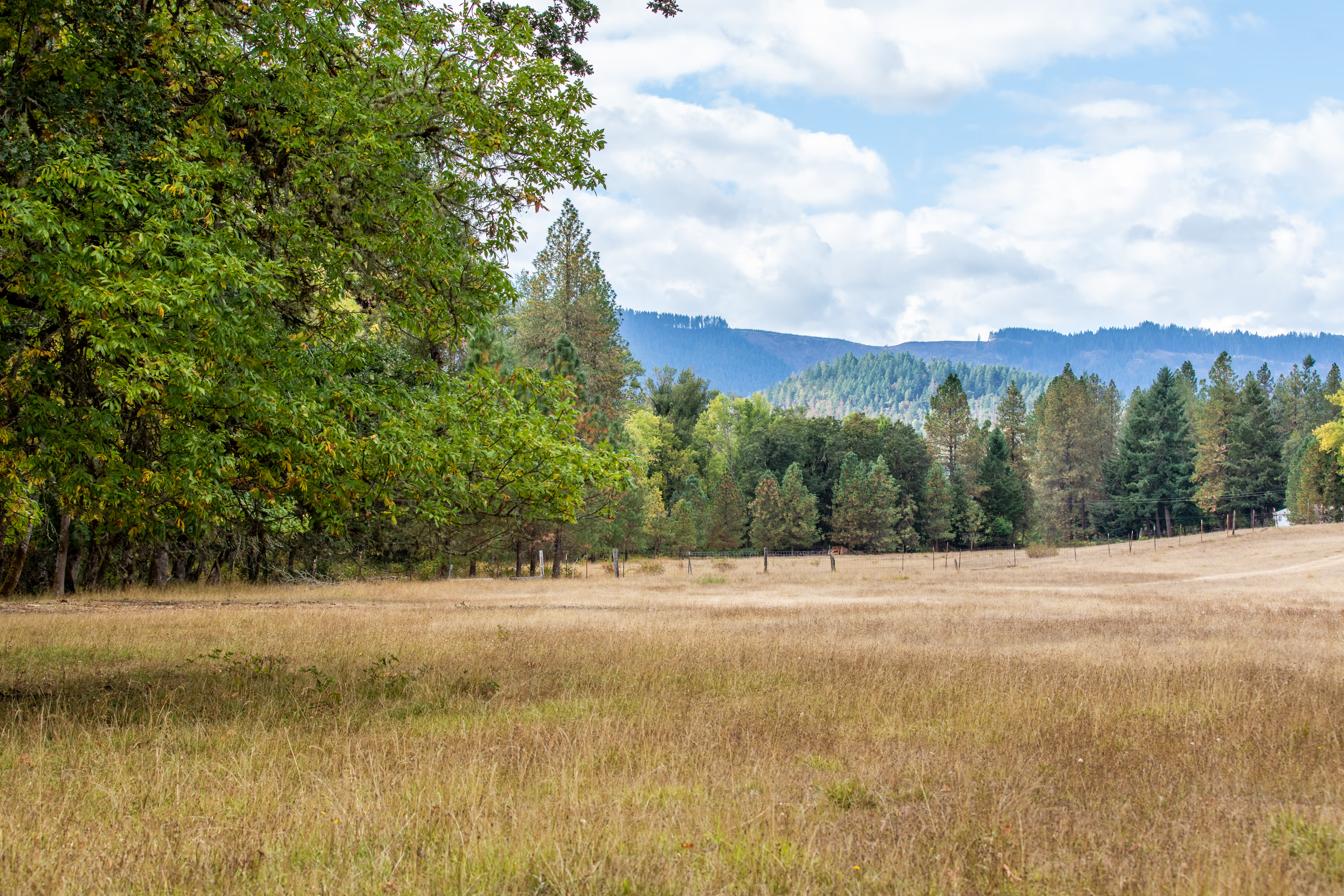
Timber, Pasture, and EFU Acreage — Aaron Knows the Land
From open meadow parcels to dense timber tracts, Aaron Cherry has guided rural buyers and sellers across Southern Oregon for over a decade. He grew up on the land and understands every layer of rural property due diligence.

The State of Rural Property in Southern Oregon
Only 4.1% of 2024 property sales in Douglas County were new construction—well below the 25-year average of 5.9%. This means the vast majority of rural property transactions involve existing structures, wells, septic systems, and infrastructure that require thorough inspection and specialized knowledge.
Among existing homes sold in 2024, 18% were classified as “remodeled or updated” and 7.3% were “fixers.” On rural parcels, fixer properties often carry additional complexity: aging wells, failing septic systems, deferred timber management, and outdated electrical systems that predate current code requirements.
The Umpqua Valley’s five-year drought (2019–2024) underscored the importance of water infrastructure on rural property. Buyers who build rainwater catchment systems, ponds, and swales during wet years protect themselves during dry ones. Aaron advises planting trees for moisture retention and completing wildfire fuel reduction work during wet seasons when conditions are safe and debris is manageable.
Rural Property Risk Factors
Flood zone—March 2025 record rainfall caused catastrophic damage across Douglas County river corridors
Drought variability—30.50" average rainfall masks a range of 16" to 42" depending on the year
Wildfire exposure—defensible space, fuel reduction, and access road width are critical evaluations
Well failure—redrilling costs $15K–$30K; always test flow rate and water quality before purchase
Septic compliance—failing systems can cost $10K–$25K to replace and may require DEQ permits
Timber rollback taxes—disqualifying from Oregon’s timber deferral program triggers up to 10 years of recaptured taxes
What Rural Transactions Actually Require
Rural property demands a different kind of broker. These are the specific tasks Aaron performs on every rural transaction — the work that prevents costly surprises after closing.
Zoning, Land Use and Title
- EFU, Timber Conservation, and Rural Residential zoning confirmed and implications explained
- Farm income test requirements reviewed for EFU dwellings and conditional use permits
- Lot-of-record status verified — partition and subdivision history researched with county records
- Deed restrictions and prior conditional use permits reviewed before offer submission
- Mineral rights and surface rights separation checked — often overlooked in rural transactions
- Easement scope reviewed: ingress/egress, utility, agricultural, and timber harvest rights on record
Water, Well and Septic
- OWRD water rights query: certificate numbers, priority dates, authorized use, and point of diversion
- Well log reviewed: depth, recovery rate, water quality history, and pump/casing condition
- Flow rate test and full water quality panel (coliform, nitrates, arsenic, heavy metals) coordinated
- Septic system type identified, DEQ compliance status confirmed, maintenance records requested
- Riparian setback assessment on waterfront and creek-adjacent parcels
- Rainwater catchment, pond construction potential, and seasonal drainage infrastructure evaluated
Access, Outbuildings and Infrastructure
- Deeded vs. easement access confirmed — verbal access arrangements identified and flagged
- Road maintenance agreements and shared access arrangements reviewed for recorded status
- Outbuilding permit history researched — unpermitted structures affect financing and value
- Fencing, cross-fencing, and livestock facility condition assessed for functionality and cost
- Internet/broadband availability verified — critical for remote work and relocation buyers
- Wildfire defensible space, road width, and access road condition evaluated
Timber, Agricultural and Tax Deferral
- Timber deferral status confirmed and rollback liability calculated before offer — no closing surprises
- Standing timber volume assessment coordinated with working foresters when scale warrants it
- Hay ground, pasture, and grazing value incorporated into pricing analysis and CMA
- FEMA flood zone determination run on every low-lying parcel — mandatory after March 2025 events
- Irrigation infrastructure condition and water delivery system evaluated for operational status
- Repair negotiation strategy prepared for major items: well, septic, roof, foundation, and access road
Rural Property FAQs
Exclusive Farm Use (EFU) zoning restricts development to agricultural uses, farm dwellings, and limited accessory structures. You cannot legally build a second dwelling, short-term rental cabin, or commercial operation on EFU land without a conditional use permit from Douglas County. EFU land is often priced lower per acre than Rural Residential (RR) land precisely because of these development restrictions, but it also carries property tax deferral benefits that can be significant on large parcels. Aaron reviews every EFU parcel's zoning history, conditional use permits, and tax deferral status before any transaction.
Absolutely. Aaron requires well inspections on every rural purchase he represents. A full well inspection includes a flow rate test (minimum 1–3 GPM for residential use), a water quality panel (coliform bacteria, nitrates, arsenic, and heavy metals), and evaluation of the pump, pressure tank, and wellhead casing. The cost is typically $400–$600 and is the cheapest insurance available on a rural transaction. Properties with failing wells can cost $15,000–$30,000 to redrill.
Generally no, not without a conditional use permit, and not all properties qualify. Oregon state law allows certain EFU dwellings for farm operators managing a minimum farm income threshold, but the rules are specific and require Oregon DLCD guidance. Accessory farm worker dwellings, lot-of-record dwellings, and template dwellings each have different qualification criteria. Aaron connects clients with Douglas County Planning and land use attorneys before any purchase that involves development intent on EFU-zoned land.
There are three primary zones to understand. The Floodway is the most dangerous—the active channel where water flows fastest during a flood event. Zone AE or Zone A is the 100-Year Flood Zone, where there is a 1% annual chance of flooding and flood insurance is typically required by lenders. Zone X (shaded) is the 500-Year Zone with a 0.2% annual chance. After the March 16, 2025 record-breaking rainfall that caused rivers to surge across Douglas County, flood zone verification is more important than ever. Aaron checks FEMA maps on every low-lying rural parcel.
Oregon's timber deferral program (Designated Forest Land) allows qualifying timberland to be taxed at its forest use value rather than market value—saving owners thousands per year on large parcels. However, when the land is disqualified from the program (through sale to a non-forestry buyer, development, or change of use), a rollback penalty applies, recapturing up to 10 years of deferred taxes. Aaron calculates the potential rollback liability before any transaction so neither buyer nor seller is surprised at closing.
Related Services
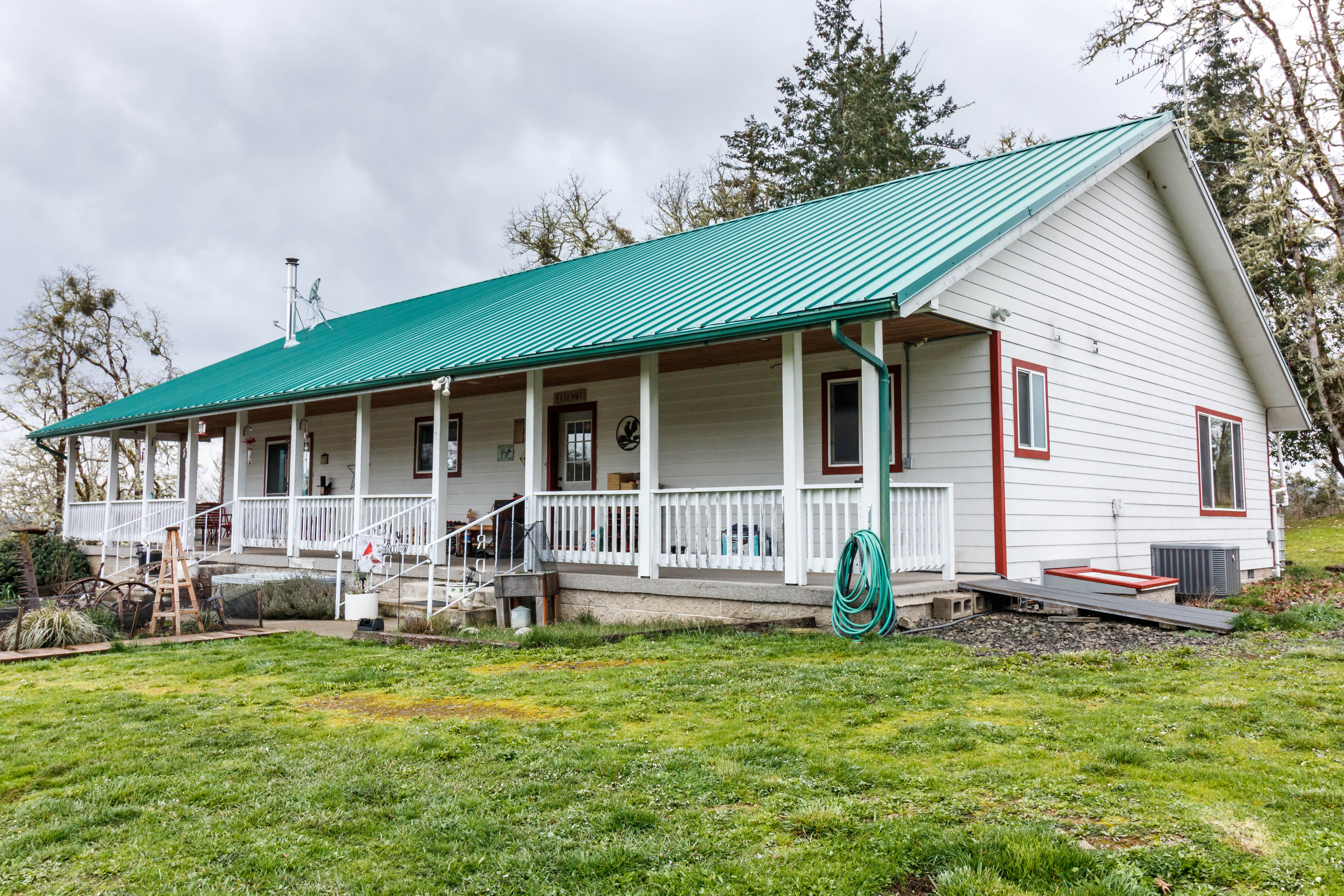
Buying or Selling Rural Land in Southern Oregon?
Call Aaron before you submit an offer, or before you list. Rural transactions move at the speed of due diligence, and having the right broker from day one prevents costly surprises.