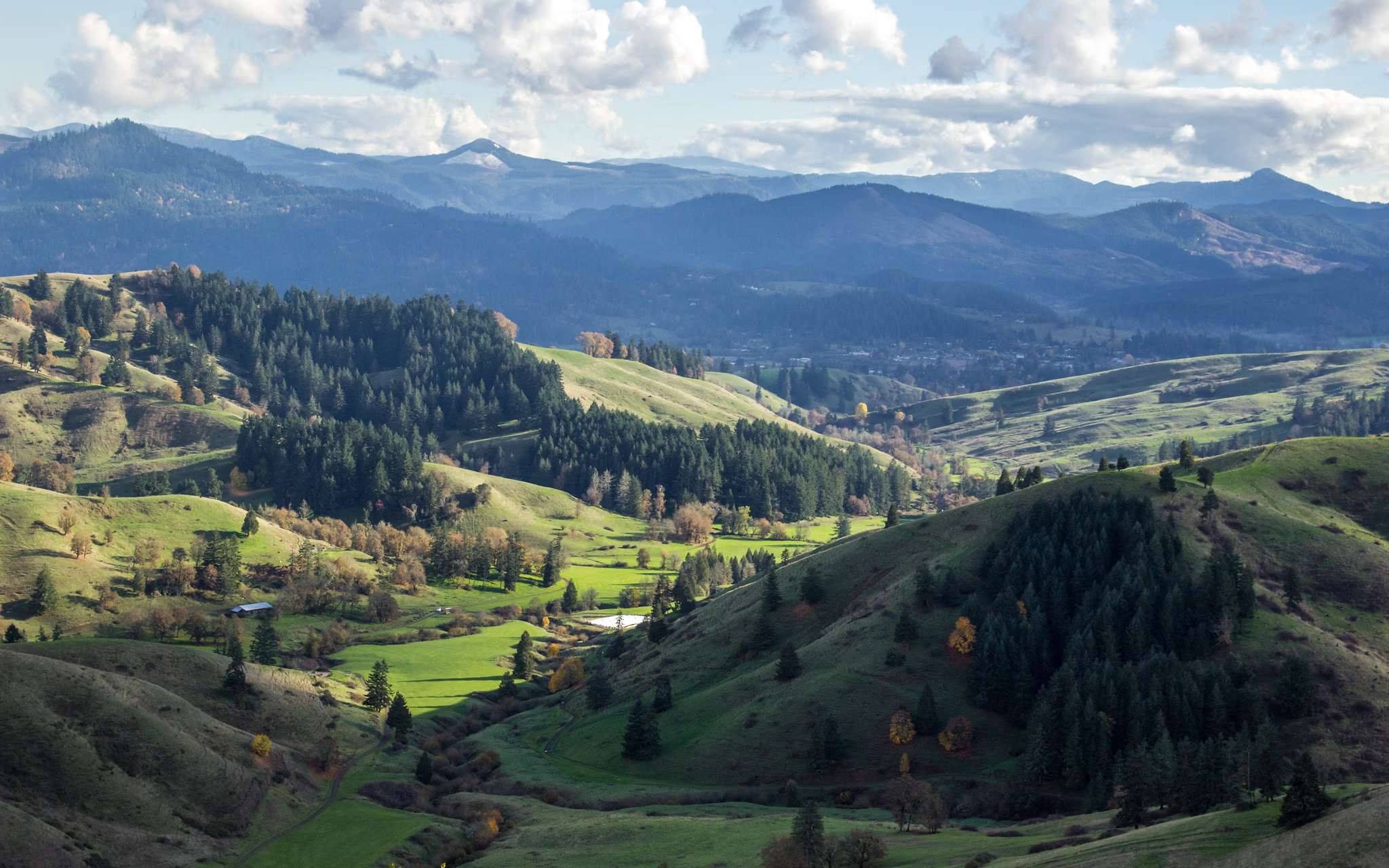
Relocating to Southern Oregon?
Aaron Cherry Has You Covered.
Southern Oregon is drawing buyers from California, the Pacific Northwest, and beyond—drawn by affordability, outdoor lifestyle, and genuine community. Let a 5th-generation local broker guide you through every neighborhood, loan program, and lifestyle decision.
Remote Work Changed Everything
Beginning in 2021, remote work trends fundamentally shifted where people could live. Southern Oregon became a magnet for buyers from California, Portland, and Seattle who realized they could trade a cramped apartment or overpriced subdivision for acreage, clean air, and a genuine small-town community—without changing jobs.
That wave has matured, but the fundamentals haven’t changed. Southern Oregon still offers a rare combination: outdoor recreation (Crater Lake, the Rogue River, the Oregon Coast are all within a 90-minute drive), a mild four-season climate, and real estate prices that make sense. Douglas County’s median home is roughly one-third the price of the San Francisco Bay Area.
Aaron has helped dozens of California and Pacific Northwest buyers make the move. He knows what surprises out-of-state buyers—well and septic systems, EFU zoning, wildfire defensible space requirements, seasonal road access—and he addresses them before they become problems.
Local Knowledge You Can’t Get Online
Oakland and Drain
Small-town living in the southern Umpqua corridor. Aaron’s hometown. Deep agricultural roots, affordable acreage, and strong community.
Glide and the North Umpqua
Gateway to the North Umpqua River and Umpqua National Forest. Popular with outdoor enthusiasts. Limited services, exceptional natural beauty.
Sutherlin and I-5 Corridor
Newer subdivisions, family-oriented, 15 minutes north of Roseburg. Good schools, convenient freeway access.
Roseburg Urban Core
The commercial and healthcare hub of Douglas County. Walkable downtown, Mercy Medical Center, broadband fiber.
Rochester Covered Bridge Area
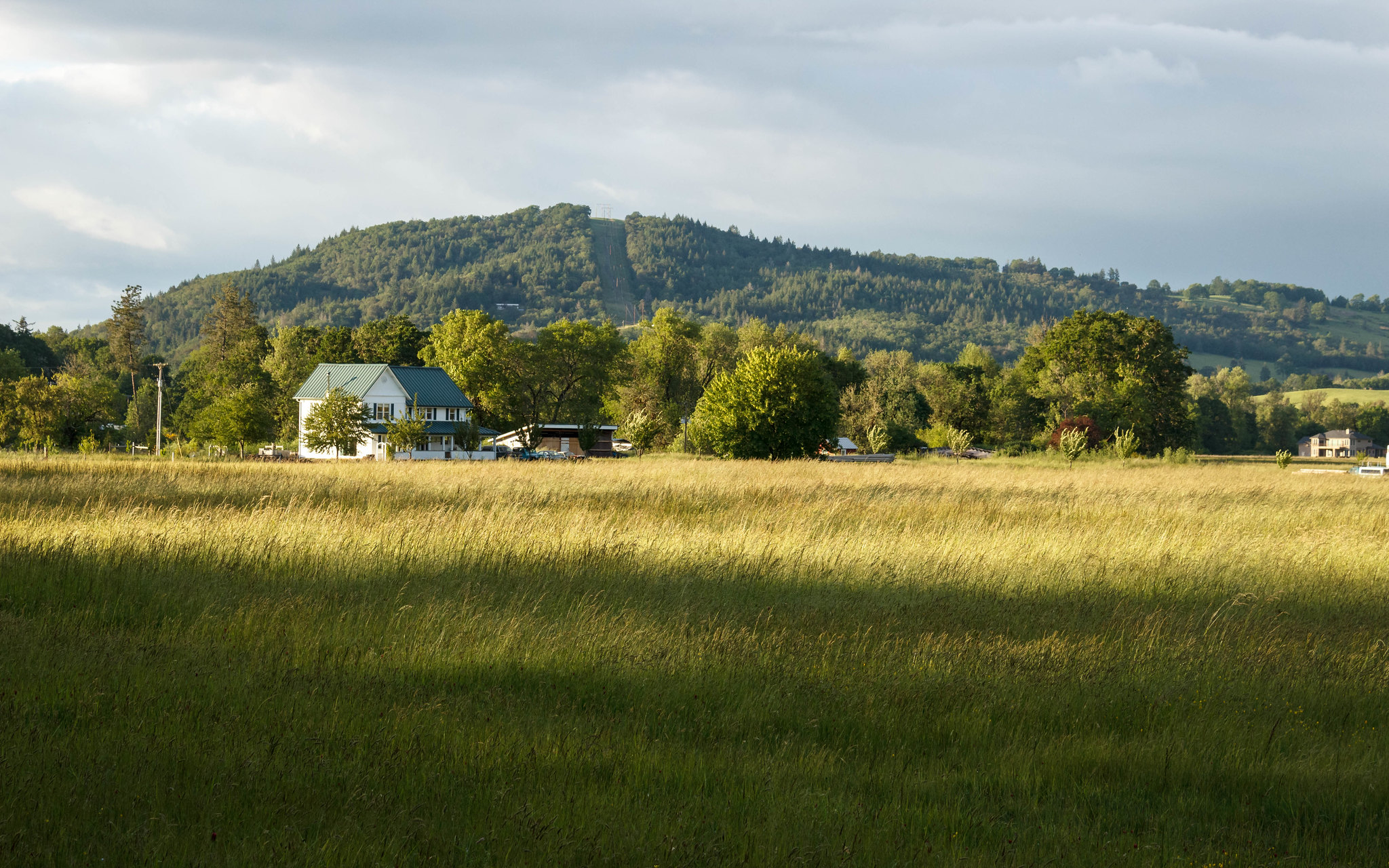
Rural living east of Sutherlin. Quintessential Umpqua Valley scenery, seasonal creek access, and pastoral landscapes.
What Aaron Does for Relocation Buyers
- Virtual consultation to understand your goals, budget, and lifestyle priorities
- Video tours and detailed neighborhood comparisons before you visit
- Introduction to local Oregon lenders with USDA rural development loan expertise
- Broadband and utility verification on rural parcels
- School district research and community introductions
- Climate, seasonal access, and wildfire risk assessment for every property
- Flood zone verification—especially critical after March 2025 record rainfall events
- Honest comparisons between Roseburg, Medford, Grants Pass, Sutherlin, and rural alternatives
Explore by County

What Does It Actually Cost to Live Here?
The median home in Douglas County is approximately $325,000. A family needs roughly $81,000 per year in income to afford that—up from $47,000 in 2020. The primary drivers are higher mortgage rates and a 30% increase in property values since the pandemic.
Despite these increases, Douglas County remains one of the most affordable markets in western Oregon. Over 23 of the last 30 years, housing here was more affordable than it is today. The most affordable stretch ran from 2011 to 2016, when median prices hovered near $150,000.
For relocation buyers coming from California or the Portland metro, the price differential is dramatic. That Bay Area condo budget buys a three-bedroom home on acreage in the Umpqua Valley with money left over.
Relocation Buyer Advantages
USDA zero-down loans cover much of Douglas, Josephine, Coos, Curry, and rural Lane County
Oregon has no sales tax—every purchase saves 7–10% compared to California
Property taxes are lower than California in nearly every bracket
Oregon Bond and first-time buyer programs offer down payment assistance
Remote work lets you keep your coastal salary while paying Umpqua Valley prices
Construction and renovation contractors are available and reasonably priced compared to metro areas
The Complete Relocation Process
Buying from out of state means making significant decisions with limited local knowledge and limited time on the ground. Here is exactly how Aaron closes that gap — before, during, and after your move.
Before You Arrive
- Virtual strategy session: needs, timeline, motivation, budget, and lifestyle priorities defined
- Neighborhood comparison guide: Roseburg, Sutherlin, Winston, Grants Pass, Medford — honest side-by-side
- Video walkthroughs of properties so your visit is focused and efficient, not exploratory
- School district, broadband, commute, and community resources researched for each area you're considering
- Local Oregon lender introductions and USDA/Oregon Bond pre-approval coordination before your trip
- Cost-of-living context vs. your origin market — what your budget actually buys here
During the Search
- MLS alerts configured to your exact criteria — fast notifications on new listings and price drops
- Showing route planned efficiently to maximize your time on the ground
- Calm, practical guidance at every showing: layout, function, resale signals, and what to look past
- Rural property orientation for buyers considering land, acreage, or well/septic properties
- Red flag detection: water intrusion, foundation symptoms, wildfire exposure, flood zone risk
- Flood zone and wildfire risk assessment on every rural parcel — mandatory after March 2025 flooding
Offer, Inspection and Closing
- Property-specific CMA built before every offer — solds, actives, pending sales, micro-location adjustments
- Offer strategy adapted to your remote position — how to compete without being physically present
- Inspection coordination with local licensed inspectors; report walkthrough via video call
- Inspection findings interpreted practically — what's significant in Oregon construction vs. what isn't
- Remote signing options fully coordinated — digital closing available for buyers who can't return for signing
- Wire fraud prevention reinforced explicitly — out-of-state buyers are among the most-targeted groups
After You Move In
- Utility transfer checklist provided: power, water, gas, internet, garbage for your specific county
- "First 30 days" homeowner guidance: lock rekeying, filter replacement, and maintenance priorities
- Trusted contractor referrals: plumbers, electricians, roofers, HVAC — vetted, local, responsive
- Community resource guide: services, municipal contacts, and local networks in your new area
- Warranty options and claims process explained if a home warranty was purchased at closing
- Long-term relationship: Aaron tracks your home's value and is available when questions arise
Relocation FAQs
Yes, significantly. The median home price in Douglas County is approximately $325,000, compared to $600,000–$900,000 in much of Northern California. Property taxes in Oregon are also substantially lower, and Oregon has no sales tax. Over 23 of the last 30 years, Douglas County housing has been more affordable than today, with the most affordable stretch running from 2011 to 2016. Buyers coming from California frequently find they can afford two to three times the land and living space for the same budget.
Southern Oregon offers lower housing costs, no sales tax, and a slower pace of life than most California metros. A family currently needs approximately $81,000 per year in income to afford the median-priced home in Douglas County. Grocery, utility, and healthcare costs are comparable to national averages. Internet access varies: urban Roseburg and Medford have gigabit fiber options, while rural areas may be limited to satellite or fixed wireless. Aaron always verifies broadband availability on rural parcels for relocation buyers.
Roseburg offers affordable housing, strong community schools, and proximity to outdoor recreation in a smaller-city setting (population approximately 24,000). Medford has more employment options, larger schools, and direct airport access. Grants Pass has a strong outdoor lifestyle culture along the Rogue River. Sutherlin, north of Roseburg, offers newer subdivisions and a quiet family atmosphere. The right answer depends on your employment, schooling priorities, and lifestyle preferences. Aaron will walk you through each market honestly.
Douglas County averages 30.50 inches of rainfall annually, with most rain falling October through April. Wildfire season runs roughly June through October, and defensible space around your home is essential. Flooding is a real concern on low-lying parcels—in March 2025, record-breaking rainfall caused rivers to surge with significant damage to homes, property, equipment, and livestock. Aaron assesses wildfire risk and FEMA flood zone status on every rural property he shows to relocation buyers.
Yes. USDA Rural Development loans offer zero-down-payment financing, and much of Douglas County, Josephine County, Coos County, Curry County, and rural Lane County falls within USDA eligibility boundaries. Income limits apply, but many families relocating from higher-cost areas qualify. Aaron connects relocation buyers with local Oregon lenders who specialize in USDA programs and can pre-qualify you in 48 hours.
Related Services
Ready to Make the Move to Southern Oregon?
Start with a free virtual consultation. Aaron will match you with communities and properties that fit your lifestyle and budget—no pressure, just honest local knowledge from someone who was born and raised here.